Related Resources and Integration Testing
Working with Relationships in Spring Data REST
- One-to-One Relationship:
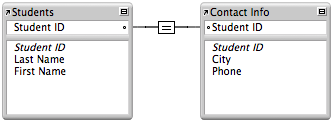
In a one-to-one relationship, one record in a table is associated with one and only one record in another table. For example, in a school database, each student has only one student ID, and each student ID is assigned to only one person.
Exmple in spring:
@Entity
public class Library {

    @Id
    @GeneratedValue
    private long id;

    @Column
    private String name;

    @OneToOne
    @JoinColumn(name = "address_id")
    @RestResource(path = "libraryAddress", rel="address")
    private Address address;

    // standard constructor, getters, setters
}

@Entity
public class Address {

    @Id
    @GeneratedValue
    private long id;

    @Column(nullable = false)
    private String location;

    @OneToOne(mappedBy = "address")
    private Library library;

    // standard constructor, getters, setters
}
- One-to-Many Relationship
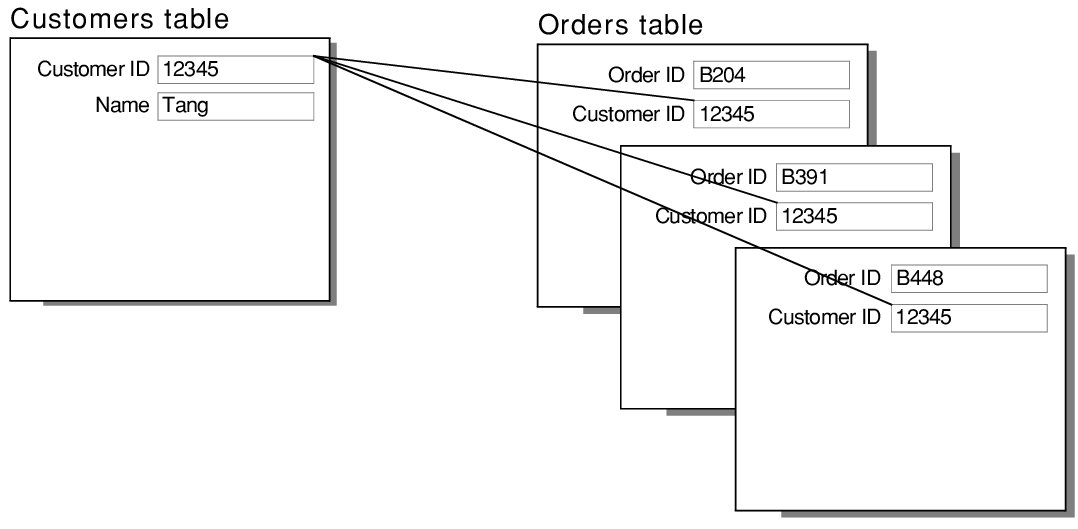
In systems analysis, a one-to-many relationship is a type of cardinality that refers to the relationship between two entities A and B in which an element of A may be linked to many elements of B, but a member of B is linked to only one element of A. For instance, think of A as books, and B as pages.
Example in spring:
@Entity
public class Book {

    @Id
    @GeneratedValue
    private long id;

    @Column(nullable=false)
    private String title;

    @ManyToOne
    @JoinColumn(name="library_id")
    private Library library;

    // standard constructor, getter, setter
}

public class Library {

    //...

    @OneToMany(mappedBy = "library")
    private List<Book> books;

    //...

}
- Many-to-Many Relationship:
@Entity
public class Author {

    @Id
    @GeneratedValue
    private long id;

    @Column(nullable = false)
    private String name;

    @ManyToMany(cascade = CascadeType.ALL)
    @JoinTable(name = "book_author",
      joinColumns = @JoinColumn(name = "book_id", referencedColumnName = "id"),
      inverseJoinColumns = @JoinColumn(name = "author_id",
      referencedColumnName = "id"))
    private List<Book> books;

    //standard constructors, getters, setters
}

public class Book {

    //...

    @ManyToMany(mappedBy = "books")
    private List<Author> authors;

    //...
}
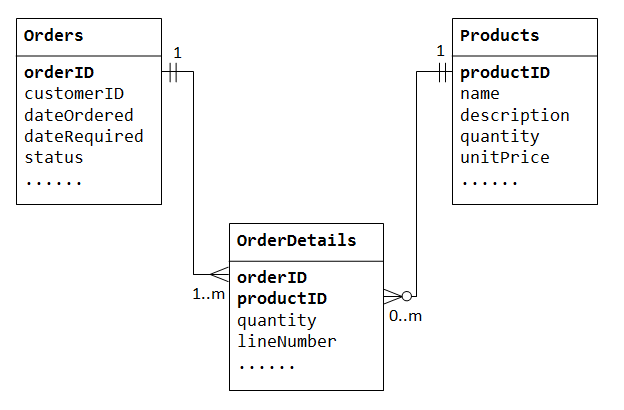
A many-to-many relationship occurs when multiple records in a table are associated with multiple records in another table. For example, a many-to-many relationship exists between customers and products: customers can purchase various products, and products can be purchased by many customers.
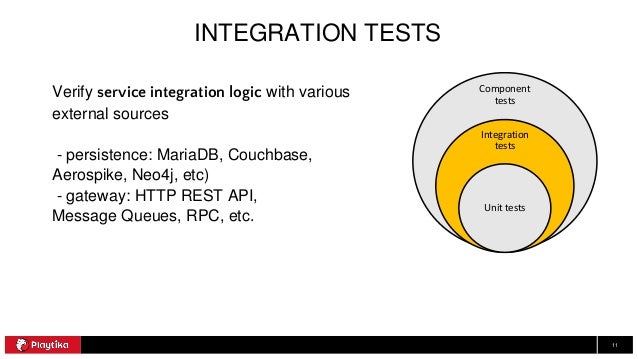
Integration Testing in Spring
Integration testing plays an important role in the application development cycle by verifying the end-to-end behavior of a system.